An introduction to truck permitting and regulatory compliance for professionals interested in supporting motor carriers and transportation businesses.
The trucking industry depends on a complex network of registrations, requirements, documentation, and regulatory processes.
For entrepreneurs and professionals who want to provide truck permitting and compliance support, understanding where to find accurate information is an essential first step.
Truck permitting is not simply about completing a form.
A professional supporting a transportation client needs to understand the client’s operation, identify the applicable requirements, research authoritative sources, coordinate documentation, and follow the process through completion.
Start With the Client
Before beginning a registration or permitting process, professionals need to understand what the client actually does.
A structured client intake can help identify important information such as:
- The client’s legal identity.
- Existing registrations.
- Whether the operation is private or for-hire.
- Property or passenger operations.
- Interstate or intrastate operations.
- Vehicle characteristics.
- Cargo.
- Hazardous materials.
- States of operation.
This information provides the foundation for determining what should be researched next.
Use Authoritative Sources
One of the most important principles in professional truck permitting is learning where to find authoritative information.
The Truck Permitting Academy™ curriculum emphasizes navigation of official U.S. Department of Transportation and FMCSA resources so students can research requirements rather than relying on assumptions or outdated information.
Professionals should become comfortable locating official resources and verifying information directly from authoritative sources.
A Professional Workflow
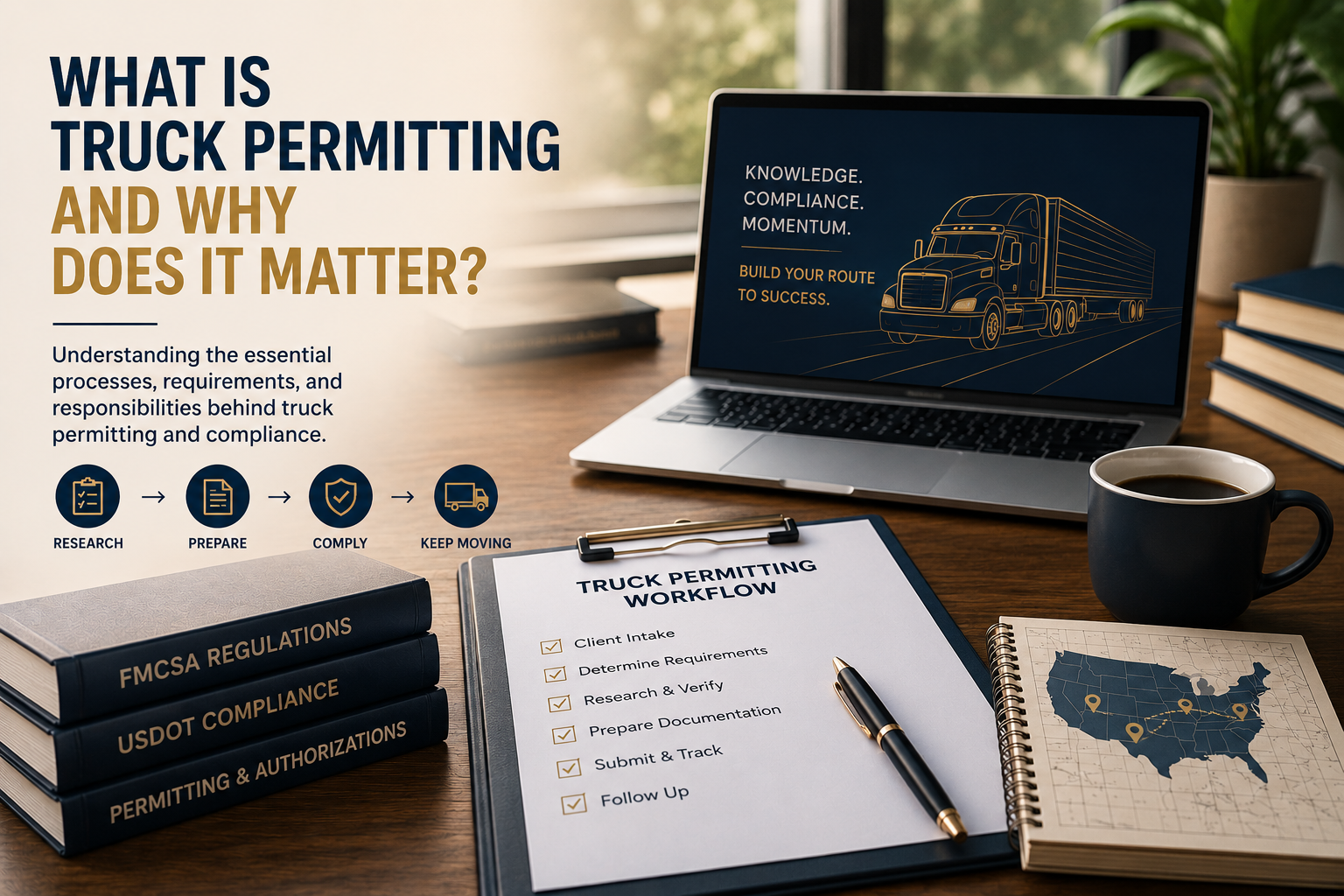
A structured workflow can help organize the permitting and compliance process.
The Academy teaches a process that includes:
Intake → Research → Classification → Authorization → Preparation → Quality Control → Submission → Documentation → Follow-Up
This approach helps professionals maintain consistency and organization throughout a client engagement.
Understanding Third-Party Responsibilities
Truck permitting and compliance support may also involve coordination with third-party providers.
For example, BOC-3 and commercial insurance requirements may involve separate providers and responsibilities.
A permitting professional should understand their role and boundaries, coordinate information appropriately, and maintain proper documentation throughout the process.
The objective is not to perform services for which the professional is not qualified, but to provide organized and professional support within the appropriate scope.
Why Professional Training Matters
Because transportation regulations and registration systems involve specific requirements and official processes, professionals need more than a general understanding of the trucking industry.
They need a framework for:
Researching. Classifying. Preparing. Coordinating. Documenting. Following up.
That is the foundation of the Truck Permitting Academy™ Professional Certificate Program in Truck Permitting & Regulatory Compliance.
The program is designed to help professionals develop the knowledge and practical workflow necessary to support transportation clients with greater confidence and professionalism.
Learn the Foundations of Truck Permitting
Explore Truck Permitting Academy™ and begin developing the practical knowledge and professional systems needed to navigate the truck permitting and regulatory-compliance environment.